Reverse image search can separate an artwork from its maker in seconds, and AI-training datasets scrape whatever they find (credited or not). One missing line in an Instagram caption is all it takes for the artist’s name to vanish from the online record. While researching art/copyright issues this semester, I kept returning to the same conclusion: a concise, three-part credit line prevents most attribution gaps before they start.
Why Proper Credit Protects Everyone
Correct attribution is more than etiquette; it serves three distinct groups at once. First, artists benefit directly. A clear credit trail reinforces authorship claims, supports future licensing negotiations, and lets potential collaborators or buyers find the original creator without detective work. Second, researchers and everyday viewers benefit. Museum databases, catalogues raisonnés, and academic papers rely on stable metadata: artist name, title, year, holding institution – all to keep historical record coherent. Remove any one of those and the provenance thread frays, forcing curators to spend valuable time re-tracing what could have been captured in a single caption. Finally, you (the person sharing the image) benefit as well. Including a robust credit line lowers the risk of takedown notices or infringement demands, demonstrates professionalism, and signals respect for the creative ecosystem you are documenting.
In short, one line of text can safeguard revenue for the artist, accuracy for the scholar, and peace of mind for the sharer.
The Three Essentials
Every reliable credit line rests on three data points. They are simple to collect yet powerful in combination.
(1) Artist’s full name
Use the spelling that appears in credible sources such as Getty ULAN, the artist’s estate website, or the museum wall label. Consistency matters: databases search exact strings, and small variations (middle initials, diacritics) can split a record in two. For collaborative pieces, list all contributors or the collective name; omitting a co-creator breaks the chain of credit from the outset.
(2) Exact title plus year of creation
A title is not just a label; it anchors the work in catalogues raisonnés and distinguishes it from similar pieces in the artist’s oeuvre. Adding the year, or range, signals which iteration you are showing. For series or studies, that single date field prevents mix-ups later when someone cites your post in a paper, assignment, or exhibition file.
(3) Direct, reliable source link
Think of the source as the map key. Museums, official artist websites, and peer-reviewed repositories offer stable URLs that future readers can follow even years later.
How This Works on Social Media Platforms
Clickable URLs vanish in most captions, so museums and art law guides endorse two condensed versions:
Version 1: Artist, Title, Year — Museum Name, City
Kazuo Shiraga, Untitled, 1964 — MoMa, New York
Version 2: Artist, Title, Year — @MuseumHandle
Kazuo Shiraga, Untitled, 1964 — @themuseumofmodernart
Public domain note: If the work is verifiably in the public domain, list Artist, Title, Year – Public Domain. Credit is still best practice and often required by open access policies.
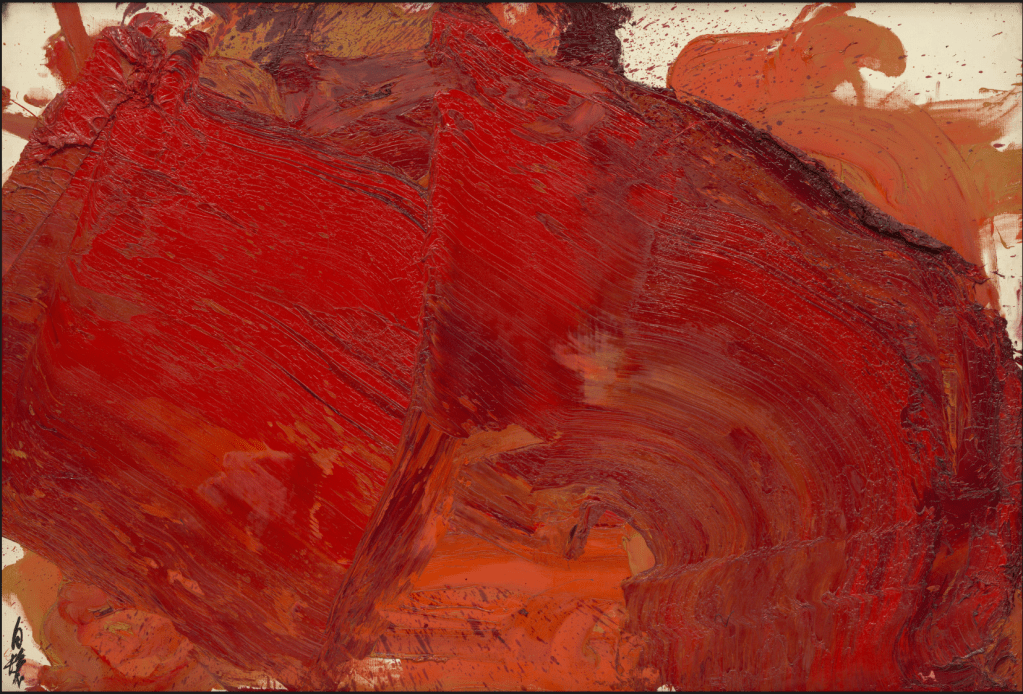
Together, these three elements protect the artist’s claim, help scholars verify facts, and give you a defensible position should questions arise about the image you shared.
Where Credits Fail
Scenario A – Lost Licensing Revenue
When an illustrator’s piece is reposted without a name or source, the image can travel faster than the credit. Months later a design agency may stumble across the artwork, assume it is “orphaned,” and use it in a campaign without permission. The illustrator then spends time and legal fees providing authorship; costs that would have been avoided if the first sharer had listed the creator’s name and a traceable link, or at least embedded that data in the file’s metadata before uploading.
Scenario B – Broken Scholarly Record
An 18th-century lithograph circulates on Tumblr with nothing more than a witty caption. Years later, a curator planning an exhibition must spend hours back-tracing the image across half-dead blogs to confirm its provenance. Exhibitions run on tight calendars; the piece may be excluded for lack of verifiable data. A simple caption that included the title, year, and holding institution would have preserved the research trail.
Both outcomes stem from the same preventable omission: lack of a robust credit line.
Tools That Speed Up Attribution
Google Images (reverse search); TinEye (reverse search); Getty ULAN (artist name authority); LoC Name Authority (standard name spellings); Creative Commons Search (license filter, credit text)
Source List & Further Reading
I relied on the following guides while researching this post; each one is worth a read for deeper detail.
– LegalClarity, How to Credit Artwork to Avoid Copyright Issues (2025)
– Ingrid Murray, How to Credit Artists Online (2021)
– CyPaint, Crediting Digital Art: A Guide for Museum Collections (2024)
– I-Paint-My-Mind, 5 Ways to Credit Artists on Social Media (2022)
– CLRN, How to Cite an Art Piece (2025)
Each emphasizes the same core trio – name, title + year, and a reliable source.
Final Thoughts
I compiled this checklist while preparing my art copyright notes. For years, I shared photos I had taken at museums without realizing there was a proper way to credit the work. I’ve since gone back and updated every old caption and tag. Learn from my mistakes: artists deserve accurate attribution, and in an era of generative AI, it matters more than ever. Proper credit not only protects established creators; it also boosts emerging artists by expanding their reach and drawing attention to their other pieces.
One line of attribution costs nothing and preserves a chain of authorship that benefits everyone who cares about visual culture. I’m still learning in this area, so if your museum, gallery, or classroom handles credit differently, or if you’ve come across situations I haven’t, please feel free to share in the comments. I’d love to learn from your experience.
Disclosure:
I am a law student sharing what I’m learning for informational purposes only.
This content is not legal advice, and reading it does not create an attorney-client relationship.
 N Y L A W T I N A
Leave a comment